Research Interests
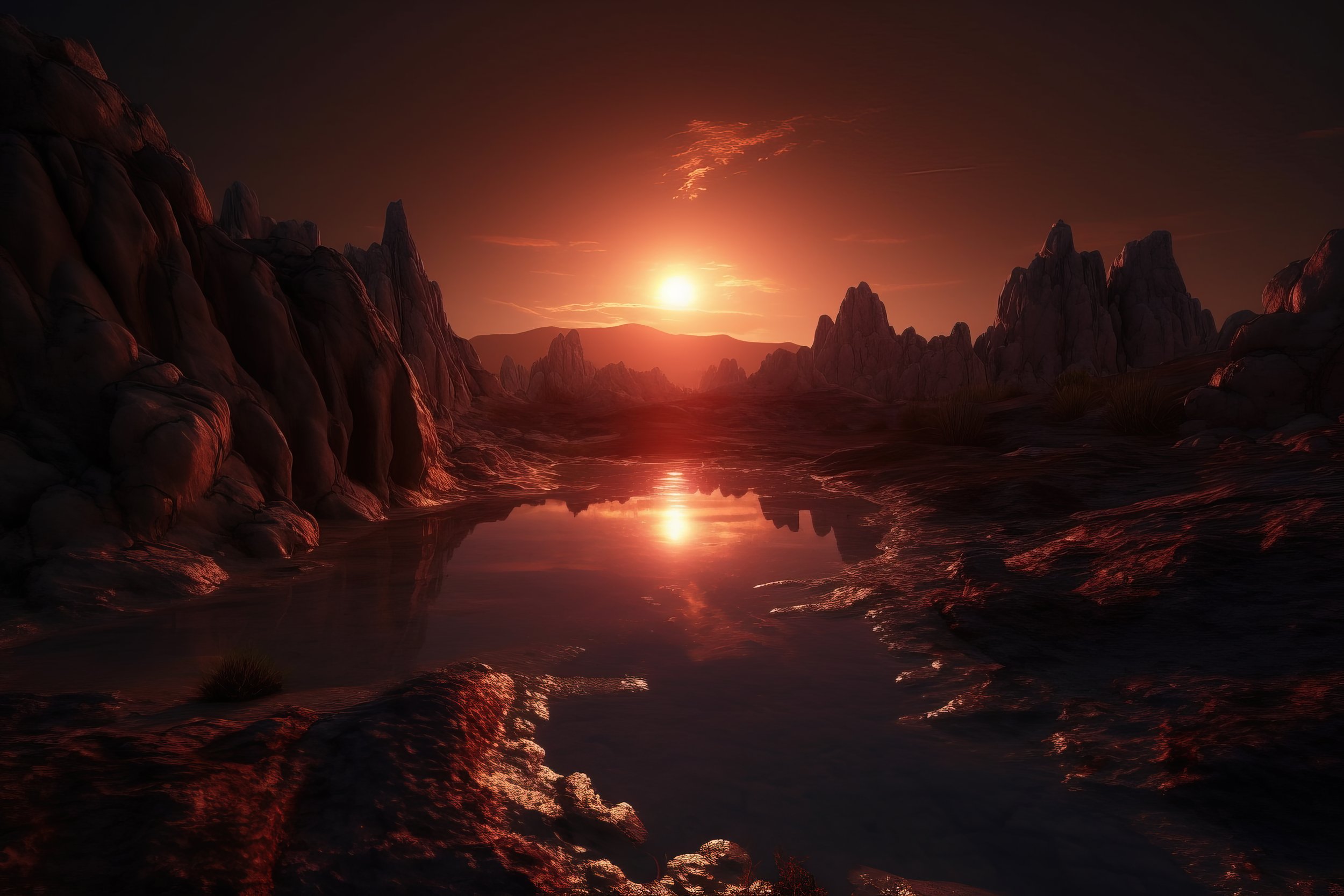
An AI rendition of a world orbiting a star that emits far-red light, infrared, and beyond.
My M.S. thesis project delved into the biosynthesis of a newly discovered chlorophyll found in marine cyanobacteria called Acaryochloris. These organisms hail from around the world, and several species contain this unique chlorophyll called chlorophyll d.
I found these organisms fascinating because chlorophyll d helps them perform photosynthesis in environments that are not as rich in full-spectrum sunlight. The available light in these environments includes far-red light and infrared, and chlorophyll d is a pigment that can absorb that low-energy light.
Acaryochloris species that tap into far-red light are becoming increasingly valuable for astrobiologists interested in the evolution of photosynthesis on other worlds. Approximately 70% of the Milky Way galaxy is comprised of stars that emit low-energy light, such as the far-red light used by Acaryochloris. With my findings, astrobiologists hope to use these cyanobacteria as model organisms to achieve our collective mission of discovering signs of life beyond our planet.